

.png)
Diameter alone does not determine the best turning process. Part length and geometry, tolerance requirements, material, production quantity, and the operations needed to complete the component also come into play.
With those factors in mind, when should you use Swiss machining? It can generally be worth considering for small-diameter precision parts, particularly when components are long or slender, require close tolerances or complex features, or are produced in repeat production runs. By supporting the workpiece close to the cutting area, Swiss machines can reduce deflection and produce more consistent results when machining long, slender parts.
But short, rigid parts with simple geometry may cost less to produce on a conventional CNC lathe, even when they have a small diameter. Ultimately, the best process depends on what the part requires and how efficiently those requirements can be met.
What Makes Swiss Machining Different?
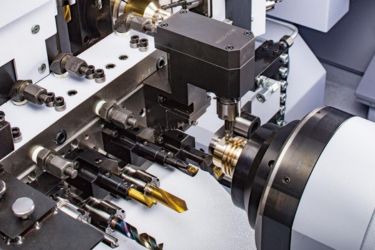
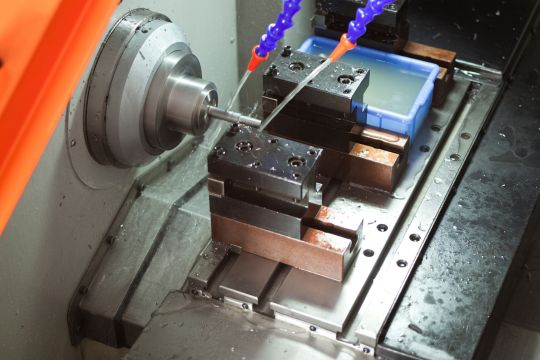
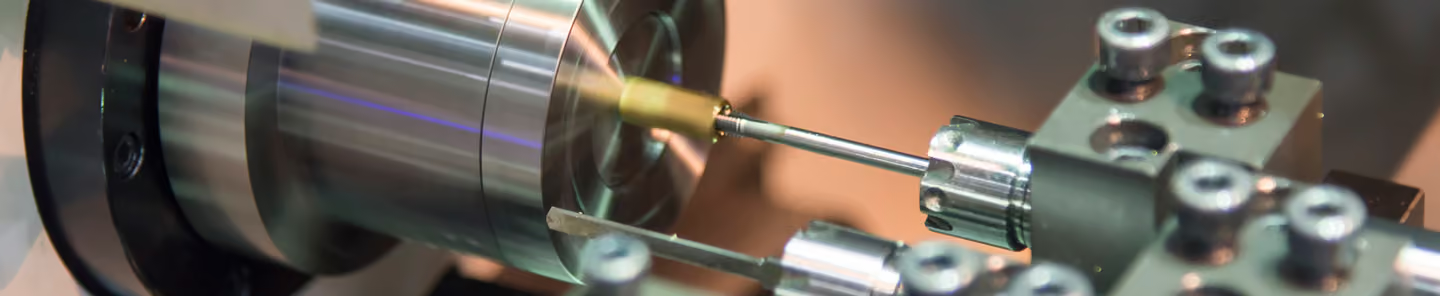
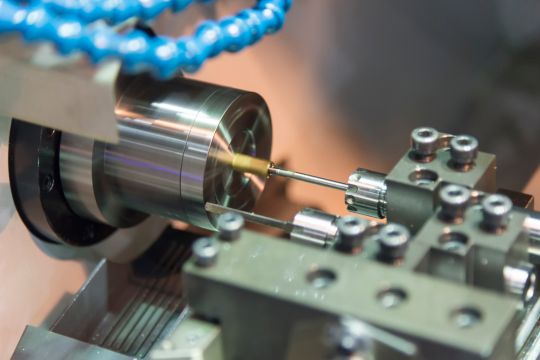
CNC Swiss machining, also called Swiss turning, uses a sliding headstock to machine small, precise parts, including components with complex features. Unlike a conventional fixed-headstock lathe, a Swiss machine feeds the bar stock through a guide bushing while cutting tools work close to where the material is supported.
This arrangement is one of the main reasons Swiss machining works well for slender components. Because the guide bushing supports the bar close to the cutting tool, there is less unsupported material that can bend under cutting forces. This can reduce workpiece deflection and vibration, which are more likely to cause problems when machining long, thin parts.
Depending on the machine configuration, modern CNC Swiss machines can combine turning with drilling, milling, tapping, cross-working, and back-working, with sub-spindles or live tooling enabling additional operations to be performed within the same machining cycle.
Some parts benefit from guide-bushing support, while others can be machined effectively without it or on conventional fixed-headstock equipment.
When Should You Choose Swiss Machining?
Swiss machining is a good fit when the part can benefit from the process. Swiss machining is often a good fit for slender parts with tight tolerances, multiple machined features, or repeat production runs where the same setup can be used to produce many parts.
Signs a Part May Be a Good Fit for Swiss Machining
- Small part diameter
- Long or slender geometry relative to the diameter
- Close tolerance requirements
- Multiple or complex turned and machined features
- Recurring or higher production quantities
- Multiple machining operations that can be completed in one setup
- Need to limit workpiece deflection during machining
Choosing the right process means considering the part as a whole, from its materials and tolerances to its geometry, production quantity, and machining requirements.
Small-Diameter or Slender Parts
Swiss machining is commonly used for small-diameter parts, but diameter is only part of the equation. A part’s length relative to its diameter can also affect whether Swiss machining is a good fit.
As a workpiece becomes longer relative to its diameter, it becomes less rigid and more susceptible to movement under cutting forces. On a conventional lathe, a long section of unsupported material can make dimensional control more challenging. A Swiss machine addresses this issue by keeping the cutting action close to the guide bushing, limiting the unsupported length of material during the cut.
Long, slender parts such as shafts, pins, and screws are often well suited to high-precision, small-diameter turning on a Swiss machine. Length-to-diameter ratio is only one consideration, though, since material, geometry, tooling, cutting conditions, and machine configuration can also affect the choice of process.
Tight Tolerances and Repeatability
Tighter dimensional requirements leave less room for workpiece movement during machining. With the guide bushing supporting slender stock near the cutting area, there is less opportunity for the workpiece to deflect enough to compromise dimensional control.
Swiss machining tolerances are not determined by machine architecture alone. Successful tight-tolerance micro-machining depends on the entire manufacturing process, including tooling, setup, part geometry, material behavior, cutting parameters, process control, and inspection.
When selecting a supplier, consider the tolerances they can reliably maintain for your specific part, not just the technical capabilities of their equipment. The achievable tolerance can vary with the drawing, material, geometry, and production requirements.
Complex Turned Parts
Swiss machining can also be a strong option for complex turned parts that combine several features. A component might require multiple diameters, grooves, threads, drilled holes, cross-holes, slots, or milled features, as well as its primary turning operations.
Depending on the machine and part geometry, compatible operations can sometimes be performed in a single setup rather than transferring the component between multiple machines. Swiss-type equipment with live tooling, multiple axes, and main and sub spindles can combine turning, drilling, tapping, milling, and other operations on the same machine.
Reducing separate setups can also mean less part handling between operations. Whether that translates into a manufacturing advantage depends on the component itself, since feature count alone does not make a part a good candidate for Swiss machining. Feature location, tool access, workholding, and the sequence of operations all need to work with the machine configuration.
Recurring and Higher-Volume Production
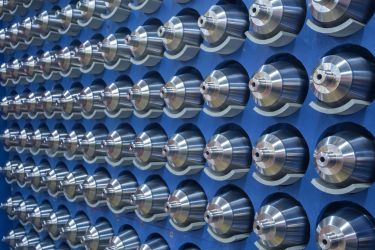
Swiss machining may make more sense when the same part is produced repeatedly or in larger quantities. Programming, tooling, machine setup, and process development all require time before production begins.
There can be additional efficiencies when multiple compatible operations are performed in-machine, reducing separate handling and secondary setups. With recurring orders or longer production runs, that initial work can be spread across more components.
With a stable process established, the same controlled setup can also help maintain consistency from part to part and across subsequent production runs. Some Swiss machines also perform operations simultaneously using multiple spindles or tool groups, although the actual effect on cycle time depends on the machine configuration and the part.
For that reason, high-volume production does not necessarily make Swiss machining the lowest-cost option. Quantity needs to be considered alongside setup complexity, cycle time, material, tooling, inspection, and the complete production route.
Difficult or Application-Specific Materials
Material is another part of the process-selection decision. Different materials behave differently during machining, so tooling, cutting parameters, heat generation, and dimensional control can vary between stainless steels, titanium, specialty alloys, engineering plastics, and other materials.
That said, Swiss machining does not inherently make a difficult material easy to cut. The shop still needs to consider material machinability together with part geometry, tolerance requirements, tool selection, and production volume.
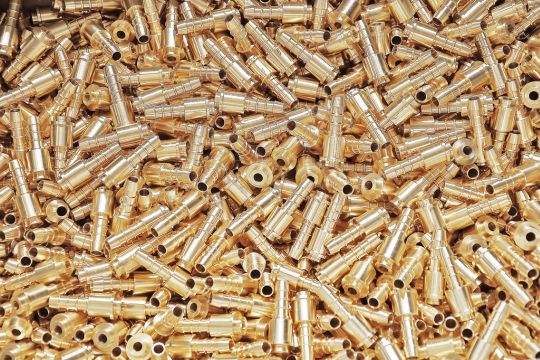
For applications requiring titanium and biocompatible alloy options, these material requirements should be considered alongside the component's geometry and manufacturing specifications. Aaero Swiss works with materials including titanium, stainless steel, brass, copper, carbon steel, aluminum, and plastics.
When Is a Standard CNC Lathe a Better Fit?
Some turned parts do not need the added support of a Swiss machine and may be better suited to another turning process. The decision depends on the part itself and how it needs to be produced.
A conventional CNC lathe may make more sense for larger-diameter parts that fall outside the practical capacity of the available Swiss equipment. It can also be a strong choice for short, rigid components that do not require additional support close to the cutting zone.
Part complexity matters as well. A relatively simple component requiring only straightforward turning operations may not benefit enough from a Swiss setup to justify the added process complexity. A simpler setup may be a better choice for very small production quantities when the part does not need Swiss machining.
Whether a guide-bushing or a non-guide-bushing operation is the better fit depends on the workpiece and its machining requirements. Some Swiss-type machines can operate with or without a guide bushing, allowing the setup to match the part. Long, slender workpieces may benefit from guide-bushing support, while shorter parts may suit non-guide-bushing operation.
Looking at the process more broadly, Swiss machining may be a good fit for small, close-tolerance, or complex components produced repeatedly. Standard CNC turning may work better for larger, rigid, relatively simple parts or production quantities that do not call for a more involved Swiss setup.
The actual drawing should ultimately determine when to choose Swiss machining over a standard lathe.
What Makes Swiss Machining Cost-Effective?
Being able to make a part on a Swiss machine is only part of the decision. Setup and programming are part of that calculation.
A complex job may require significant upfront process development, but the cost can be spread across more parts as production volumes increase or orders are repeated. Cycle time also matters, particularly when compatible operations can be combined or performed simultaneously on the available equipment.
The overall cost of producing a part can depend on:
- Setup and programming requirements
- Cycle time
- Number and complexity of features
- Tooling requirements
- Material utilization
- Order quantity and expected repeat orders
- Opportunities to complete compatible operations in one machine
- Additional handling and secondary operations
- Inspection requirements
- Scrap or rework risk
- Overall production consistency
Looking only at a machine’s hourly rate or the quoted piece price can miss how these factors interact. A more involved setup may still save time or reduce costs if it eliminates later machining steps or can be reused for repeat production, while simpler parts may be handled more efficiently with conventional turning.
A useful cost comparison considers the full process required to produce parts that meet specifications, not just the type of machine used.
What Should You Provide for a Swiss Machining Quote?
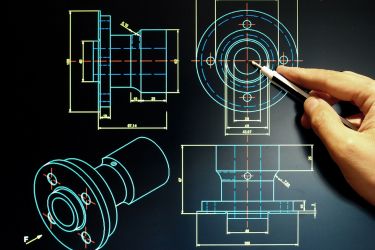
Even when a component appears to be a strong candidate for Swiss machining, the final process decision requires review of the actual part.
When submitting a Request for Quote (RFQ), provide enough technical and production information for the machine shop to evaluate manufacturability, process requirements, and pricing. Useful information includes:
- Part drawing and/or CAD file
- Critical dimensions and tolerances
- Material and applicable material specifications
- Expected order quantity
- Anticipated repeat order quantities or frequency
- Surface-finish requirements, when applicable
- Required secondary operations
- Inspection or documentation requirements
- Required lead time or delivery schedule
The more complete the RFQ information is, the easier it is for a machine shop to determine whether Swiss machining or another manufacturing approach is appropriate for the component.
Providing the drawing is particularly important because dimensions alone cannot show every feature, tolerance relationship, or manufacturing challenge. Aaero Swiss's online RFQ process allows prospective customers to include a drawing attachment when submitting a project for review.
Choosing the Right Process for the Part
The answer to when to use Swiss machining depends on how the finished part interacts with the manufacturing process. Engineers and sourcing teams should review the drawing, material, quantities, tolerances, and production requirements together before selecting the process.
Whether Swiss machining is the right choice ultimately depends on how well the process fits the part and its production requirements. If you are evaluating a small, close-tolerance, or complex turned component, Aaero Swiss offers high-precision Citizen Swiss CNC turning, Swiss CNC screw machining, and micro machining for a range of metals and plastics. You can submit your drawing and project requirements to determine whether Swiss machining is a good fit for the part.